

Types of Trees Available
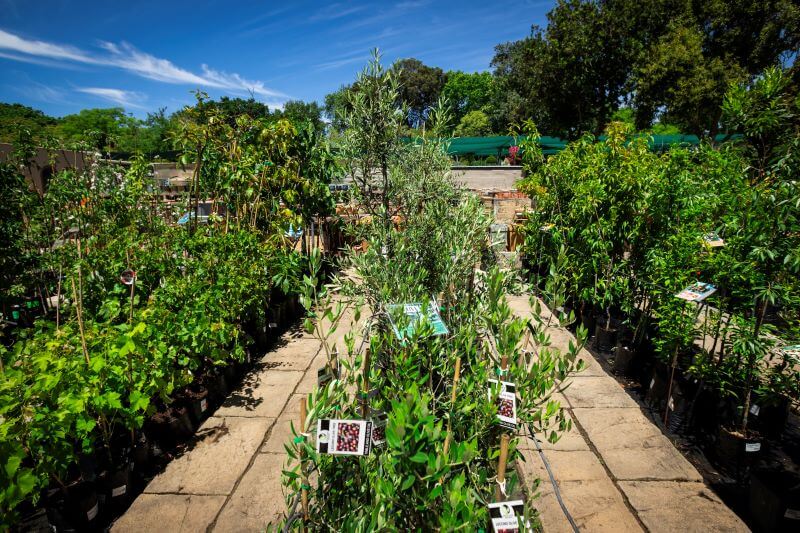
We stock both Indigenous and Exotic trees including Evergreen and deciduous options A Deciduous tree will give you shade in summer whilst allowing much needed sun through in our winter dark winters. Popular evergreen screening trees include Water Pears, White Pears and Wild Olives. If its flowering varieties you’re looking for our Magnolia, Coral and Frangipani trees will wow you.

Tree Care
Light:
Trees in Cape Town generally thrive in full sun (6-8 hours daily), with many species like Acacia, Syzygium, and Celtis requiring ample sunlight to grow and flourish. Some tree species, such as Diospyros and Apodytes, can tolerate partial shade and may thrive in more sheltered spots. However, for optimal growth, most trees prefer direct sunlight.
Watering:
Check soil moisture before watering to avoid overwatering, as this can lead to root rot. Trees in Cape Town typically prefer well-drained soil, but the watering needs vary depending on the species. Water deeply but less frequently, especially during dry spells, and always ensure the trees have proper drainage. Watering should ideally be done in the early morning or evening to minimise evaporation.
Temperature:
Most trees in Cape Town grow best in temperatures between 18-24°C, although many are well-suited to withstand higher or lower temperatures depending on the species. Indigenous trees such as Fynbos species are adapted to the region’s heat and occasional frost. During extreme heat in summer, consider providing some shade or shelter for young vulnerable trees to prevent heat stress.
Fertilising:
Use a balanced fertiliser formulated for trees during the growing season (spring and summer). Apply the fertiliser according to the recommended dosage to ensure steady growth and strong root development. All species would benefit from organic compost applied as a mulch. Avoid over-fertilising, as this can lead to poor growth and nutrient imbalances.
Pruning:
Pruning trees is essential for maintaining their shape, removing dead or damaged branches, and improving air circulation. For young trees, pruning can help shape the structure, while mature trees may only require occasional deadwood removal and thinning to promote healthy growth. For Deciduous varieties, it is advised to prune during the dormant season to reduce stress on the tree.
Pest Management:
Monitor trees for common pests such as Aphids, Scale Insects, and Caterpillars. Pests can be controlled using Organic Insecticides. Regularly inspect the tree bark and leaves for signs of infestation or diseases beetle detection and management is vital to protecting urban forests.
