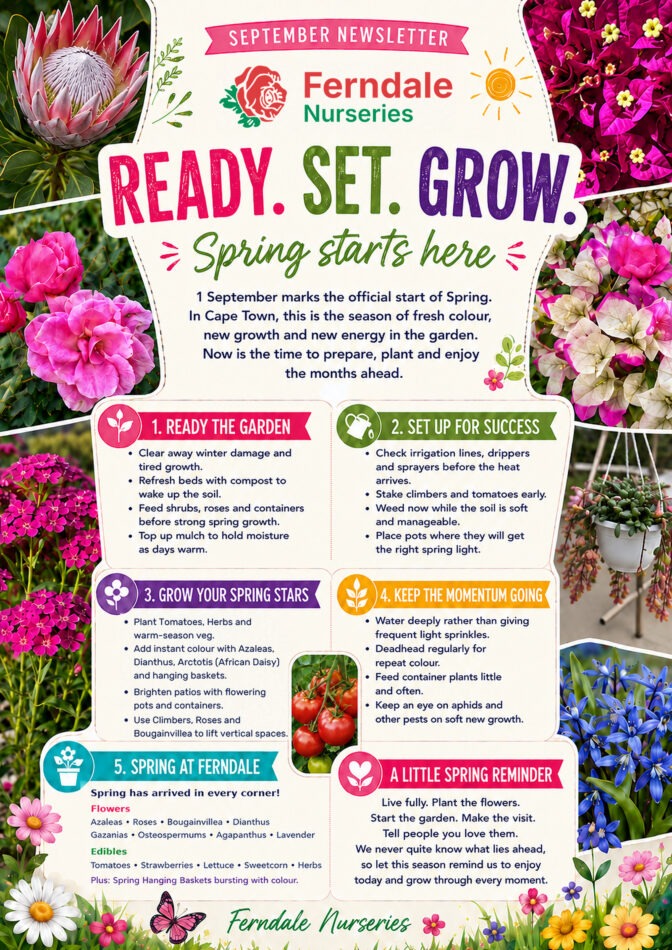
Ready | Set | Grow
Your Cape Town Garden in September
On the gardening calendar, 1 September marks the start of spring, but Cape Town gardens do not change season overnight. September can still bring cold fronts, rain, wind and sudden warmer days. The smartest approach is to Prepare first | Plant thoughtfully | Let the soil and weather guide you. Our Ready | Set | Grow September guide keeps the month simple: ready the garden, set up for success, choose your spring stars, keep the momentum going and enjoy the colour returning to the nursery and your garden.
1. Ready the garden
Begin with what winter has left behind. Remove broken stems, storm damage, and clearly tired growth, but avoid cutting every plant back simply because the calendar says spring. Different plants need different pruning times, so ask before making a hard cut if you are unsure.
Once the surface is clear, spread a layer of good compost over open beds and around established plants, keeping it away from trunks and crowns. Compost supports soil structure and soil life; it is not a substitute for every plant’s feeding needs. Feed roses, shrubs and containers with the appropriate product, following the label rather than guessing the dose.
Finish with mulch where the soil is bare. Mulch helps slow moisture loss as days warm, protects the soil surface and reduces weed germination. Apply it to damp soil and keep it clear of stems and trunks.
2. Set up for success
Before the first properly hot day, test irrigation rather than assuming it is working. Run each zone and look for blocked drippers, split pipe, overspray and areas the water is not reaching. Watering deeply and less often generally encourages deeper roots, but the correct rhythm depends on the plant, pot size, soil and weather. Always check the soil first.
Put supports in place for tomatoes and climbers while plants are still small. It is easier to guide new growth gently than to untangle and tie heavy stems later. Weed after rain or watering while the ground is soft, and reassess your pots: the sun angle changes through spring, so a position that worked in winter may be too dark or too exposed now.
3. Grow your spring stars
September opens the door to tomatoes, herbs and other warm-season vegetables, but local microclimates matter. Choose the warmest suitable part of the garden, wait if the soil is still cold and waterlogged, and protect tender young plants when a late cold spell is forecast. Tomatoes need strong light, consistent moisture, fertile well-drained soil and early support.
For colour, begin with the conditions rather than the flower. Note how many hours of sun the space receives, whether it is exposed to wind, how often you can water and whether the plant will live in a bed, pot or hanging basket. Then choose plants that can thrive there. This approach creates a better display and less work than choosing on colour alone.
Patios and balconies can carry a great deal of spring colour in containers. Use a pot with drainage holes, a quality mix suited to the plants and a saucer only where standing water will not leave roots wet. Group plants with similar water and light needs.
4. Keep the momentum going
Spring growth is soft and quick, which makes regular short checks more useful than an occasional rescue mission. Feel the soil before watering. Deadhead repeat-flowering plants where appropriate. Feed container plants lightly and according to the product instructions, because nutrients wash through pots more quickly than garden soil.
Look under new leaves and around soft tips for aphids and other pests. A few insects do not always require a strong treatment. Identify the problem first, check the extent of it, and choose the least disruptive suitable response. Ferndale staff can help when you bring a clear photograph or a sealed sample.
5. Spring at Ferndale
Our September poster highlights the below as starter seasonal inspiration. Nursery stock changes quickly, so please confirm availability before making a special trip for a particular plant, colour, variety or pot size.
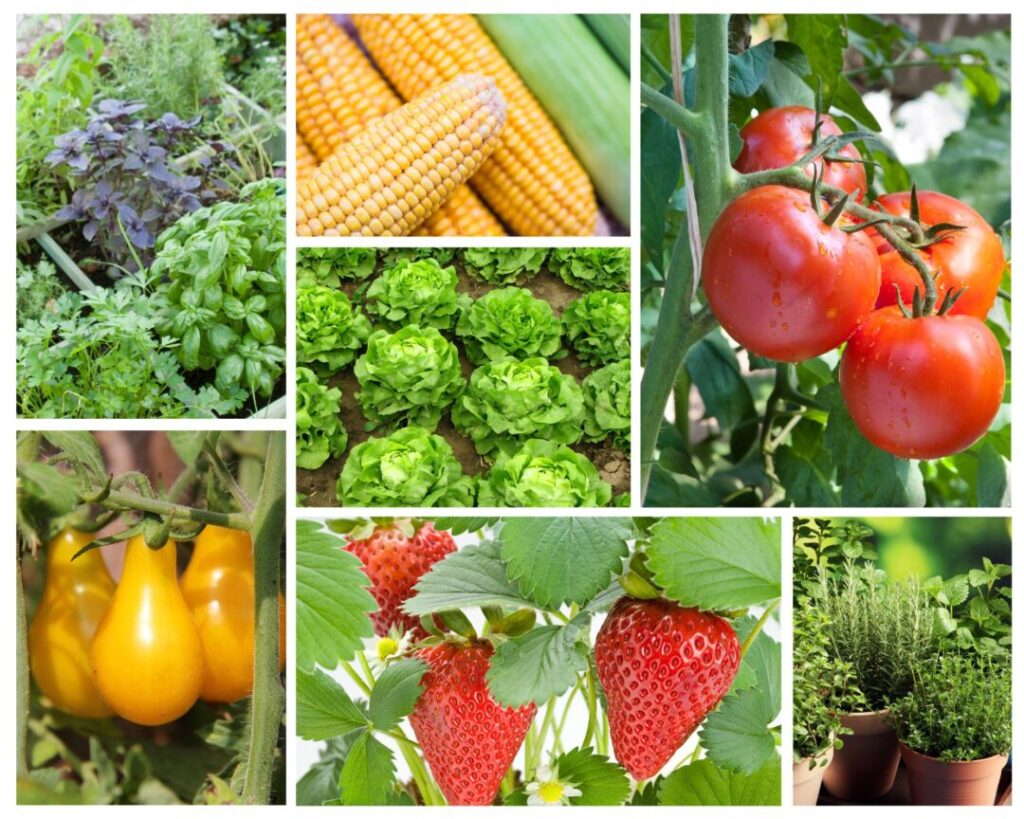
Edibles
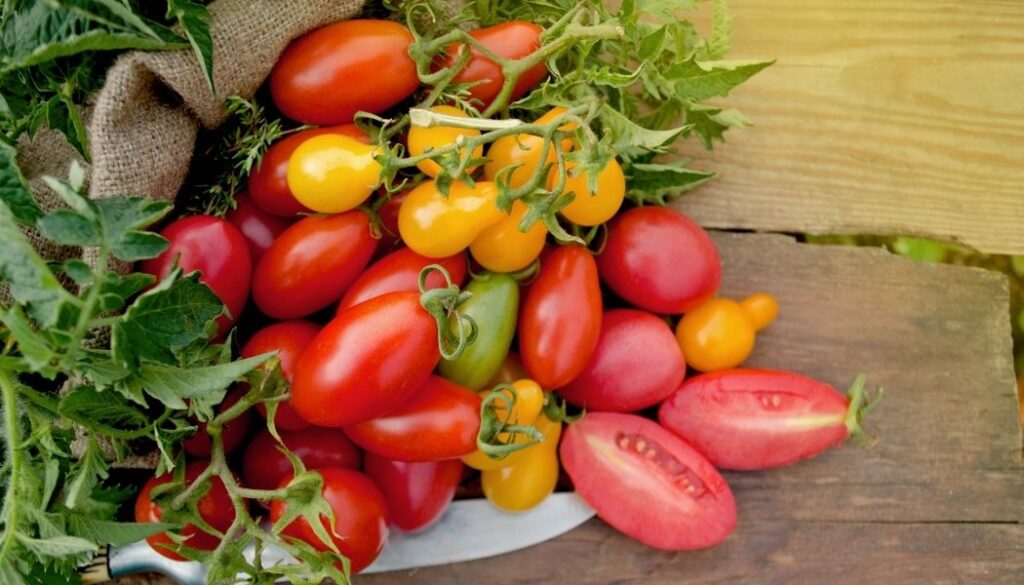
Tomatoes
Strawberries
Lettuce
Sweetcorn
Herbs
Tomatoes
Choose a warm, sunny & sheltered position. Prepare fertile, well-drained soil or a large container, add support early & water consistently at soil level. Avoid planting into cold, saturated soil & protect young plants if a late cold snap arrives.
Strawberries
Plant Strawberries in the sun with fertile, well-drained soil or potting mix. Keep the crown level with the soil, water consistently and use clean mulch beneath developing fruit to reduce soil splash, & to retain moister.

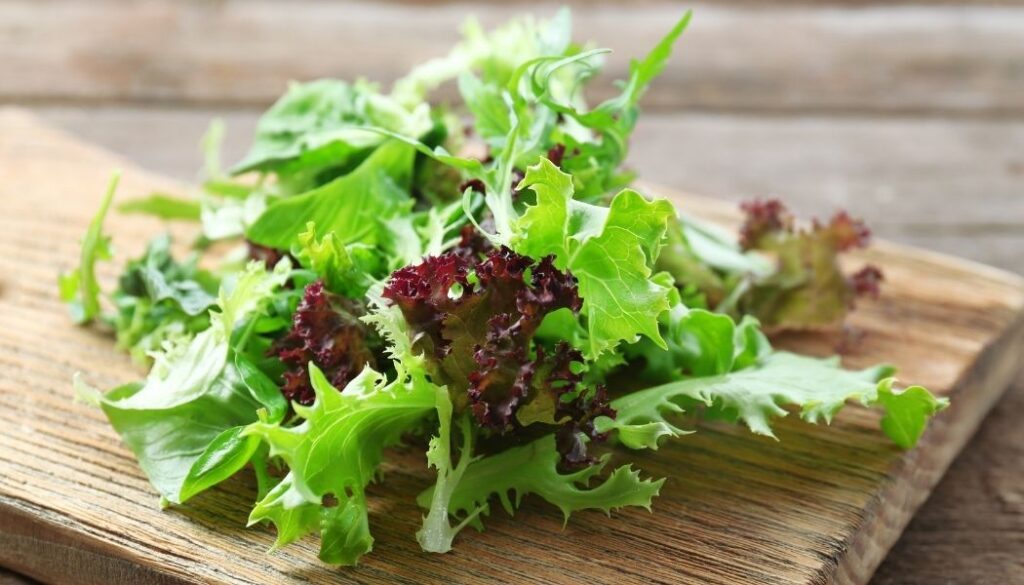
Lettuce
Lettuce appreciates fertile soil and steady moisture. In our warming spring weather, morning sun with protection from harsh afternoon heat can help leaves stay tender; plant small batches for a steadier harvest. Watch for pests.
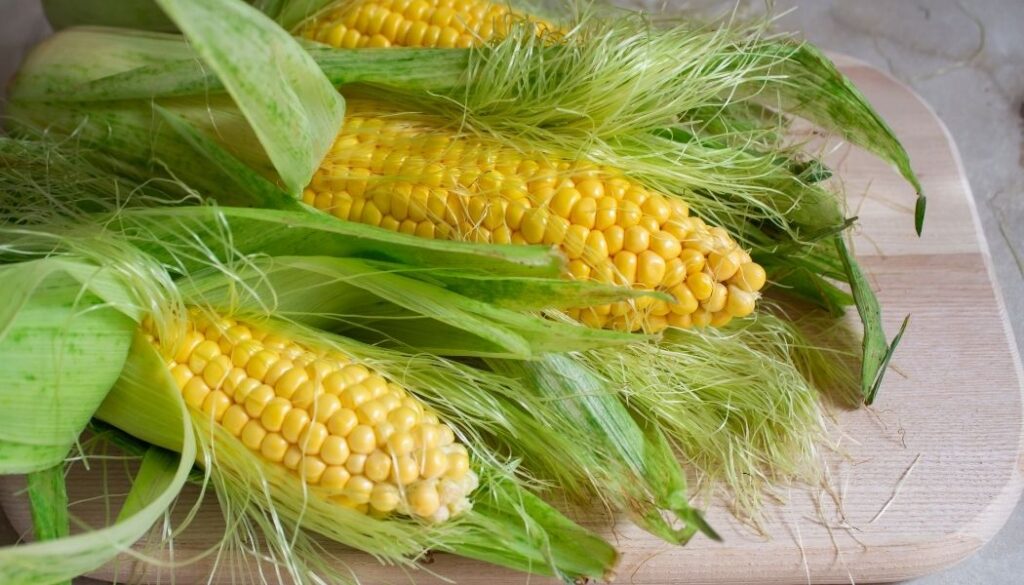
Sweetcorn
Sweetcorn needs warmth, full sun, rich soil and regular water. Plant in a compact block rather than one long row to improve wind pollination, and allow enough space for the mature plants.
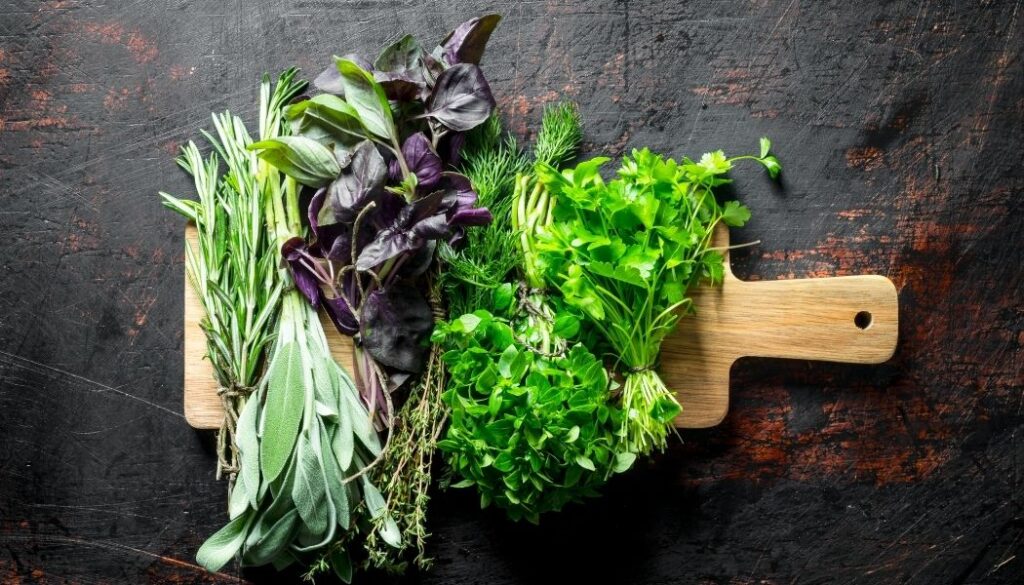
Herbs
Herbs do not all want the same conditions. Group them by light, drainage, & water needs. Some enjoy the warmth & regular moisture, others prefer sunnier, drier conditions.
Flowers
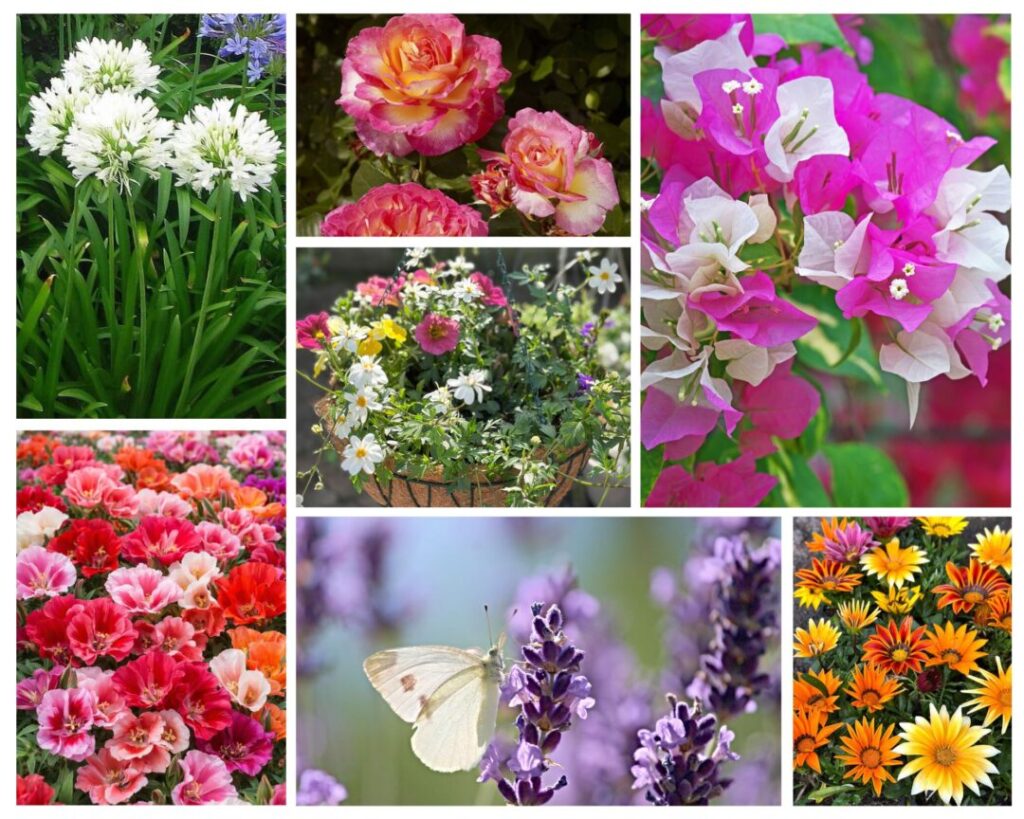
Azaleas
Roses
Bougainvillea
Dianthus
Gazania
Osteospermums
Agapanthus
Lavender
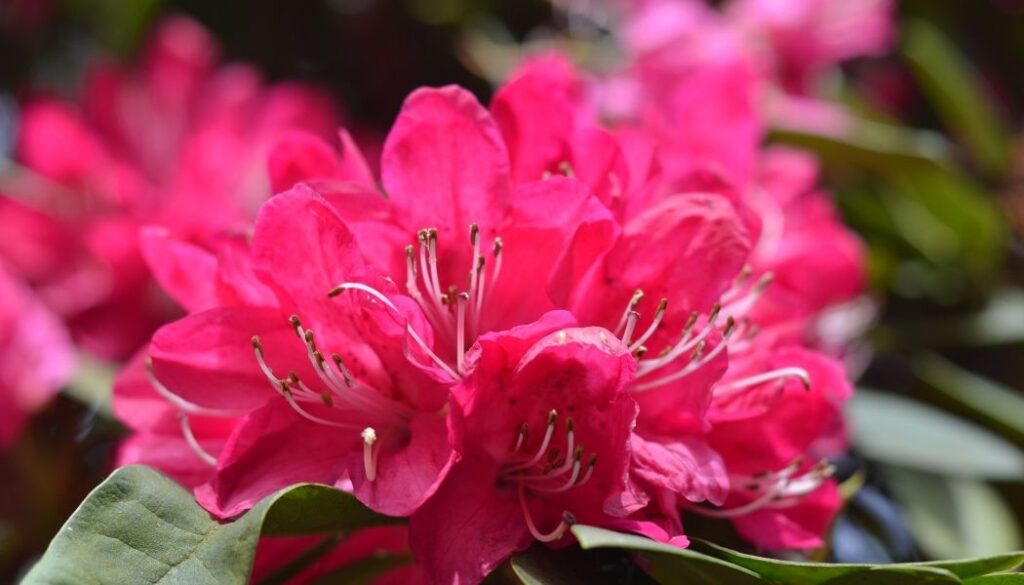
Azaleas
Generally enjoy morning sun or bright filtered light, an acidic, well-drained growing medium, and consistent moisture without waterlogging. Protect them from harsh reflected heat and do not allow container plants to dry out completely.
Roses
Give roses generous sun, good air movement and room to grow. Water the soil rather than wetting foliage late in the day, remove spent flowers from repeat-flowering varieties and feed with a rose-suitable product according to its label.

Bougainvillea
Flowers best with plenty of sun, warmth and sharp drainage. Avoid keeping the roots constantly wet and avoid high-nitrogen feeding that encourages leaves at the expense of colourful bracts. Give climbing plants a strong support and enough room.

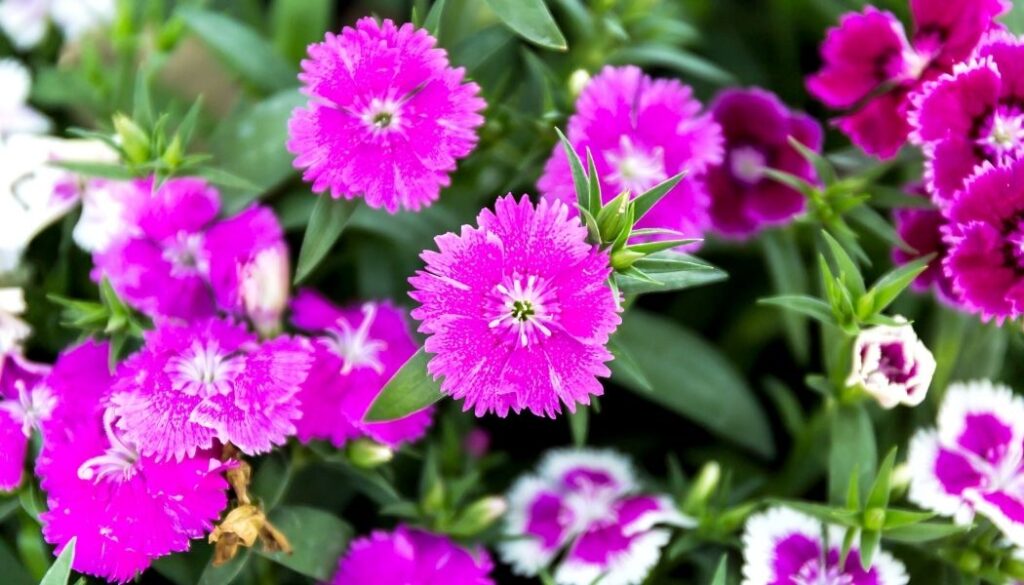
Dianthus
Prefers full sun and fertile, well-drained soil. Water at soil level when the upper soil begins to dry, avoiding a constantly wet crown. Remove spent flowers regularly to encourage repeat flowering and maintain a compact, tidy plant.
Gazanias
Flower best in full sun & well-drained soil. Tolerates dry conditions once established. Requires regular watering while settling in. Avoid overwatering, remove faded flowers to keep plants neat & encourage further flowers.

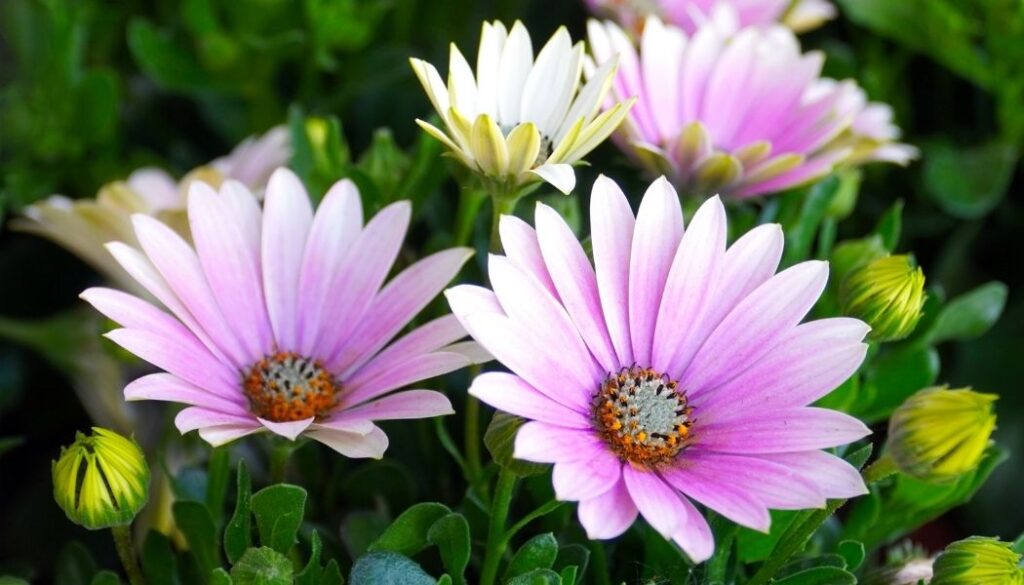
Osteospermums
Produce their best flowers in full sun, well-drained soil & good air movement. Water regularly while establishing, allow the upper soil to dry slightly between waterings. Deadhead frequently to encourage repeat colour.
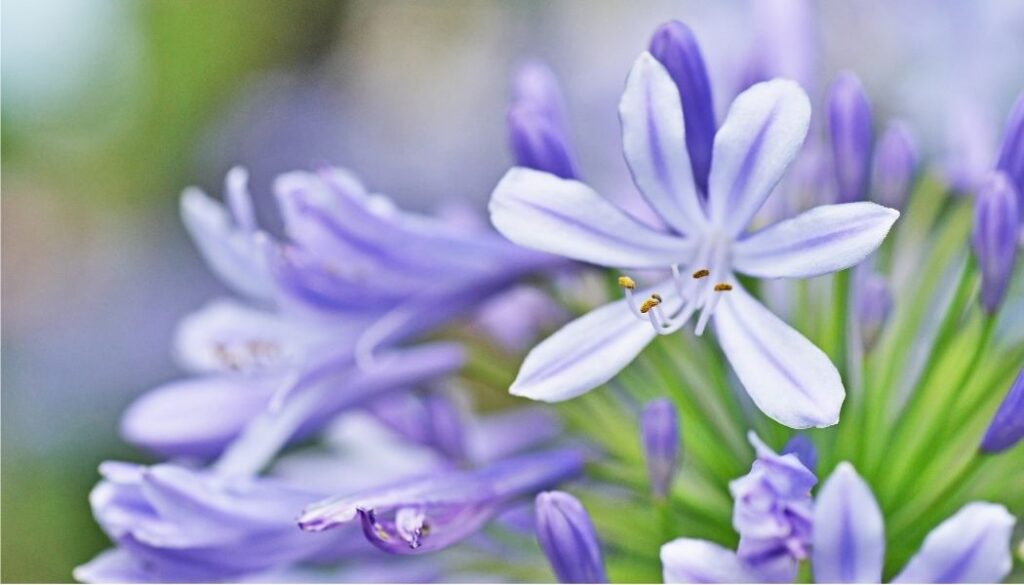
Agapanthus
Grows in full sun to light shade, although stronger light generally produces better flowering. Plant in compost-enriched, well-drained soil and water consistently while establishing. Mulch around the plant without covering its crown.
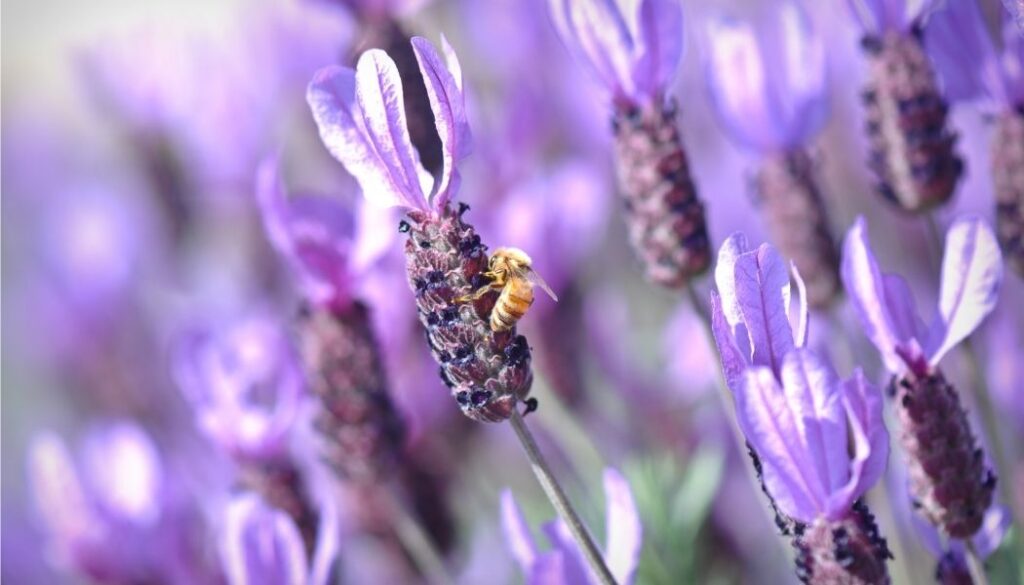
Lavender
Needs full sun, excellent drainage, and good air movement. Avoid constantly wet soil and excessive feeding, which can produce soft growth with fewer flowers. Trim lightly after flowering, but do not cut hard into old, bare wood.
A little spring reminder
A garden does not have to be finished to be enjoyed. Start with one useful job, plant what suits the space and keep checking in as the season changes. Bring photographs, rough measurements and your questions when you visit Ferndale Nurseries, we will help you make choices that work in your garden.