

Winter is a wonderful time to give your roses a proper reset. While the garden may look quieter, your roses are preparing for their next flush of growth, and a good prune now helps them return stronger, healthier, and better shaped when spring arrives.
Pruning is not about cutting for the sake of cutting. It is about removing tired or weak growth, creating space for air and light, and encouraging fresh shoots that can carry beautiful blooms later in the season. We recommend that rose pruning be done generally from mid-July to the end of August, with local weather conditions helping to guide the best timing.
Why Prune Roses?
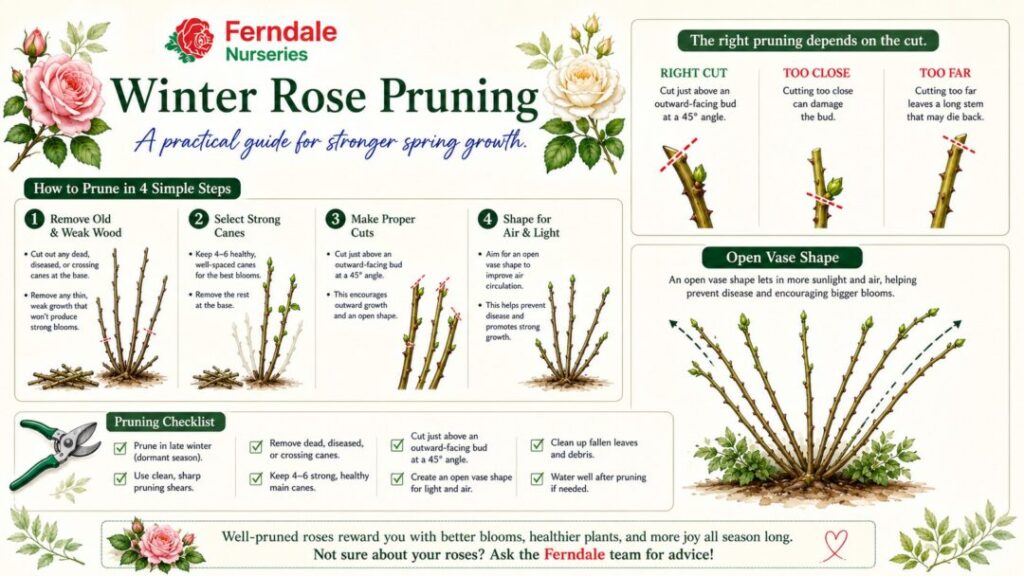
A well-pruned rose is easier to manage, less congested, and better prepared for strong seasonal growth. By clearing away dead, weak, or crossing stems, you give the plant more energy to direct into healthy new shoots.
Opening the centre of the rose also allows better airflow through the plant. This helps reduce the damp, crowded conditions that often encourage pest and disease issues. It is also important to remove dead, diseased, spindly, and crossing stems while aiming for well-spaced growth that allows air to move freely.
When Should You Prune?
Winter rose pruning usually falls between mid-July and late August. In warmer areas, gardeners may prune a little earlier, while in colder areas, they may wait slightly longer. The aim is to prune while the plant is resting, before strong new spring growth begins.
Choose a clear, cool day if possible. Avoid pruning when the plant is very wet or under obvious stress.
What You’ll Need
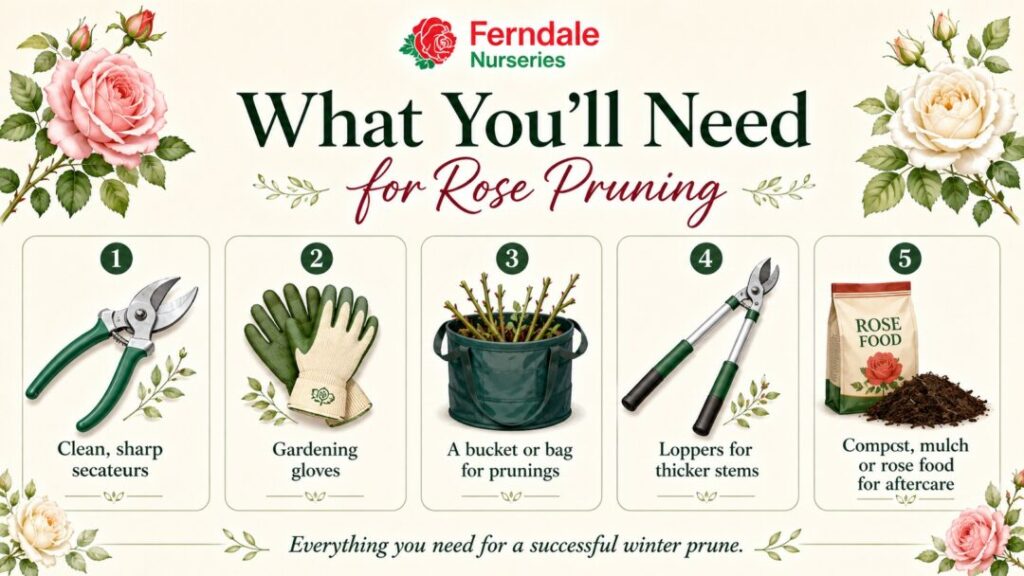
Before you begin, gather a few basics:
- Clean, sharp secateurs
- Gardening gloves
- A bucket or bag for prunings
- Loppers for thicker stems
- Compost, mulch or rose food for aftercare
Clean, sharp tools make neater cuts and are kinder to the plant. We also recommend sharp secateurs for clean cuts, with loppers or a pruning saw used for thicker stems.
How To Prune Your Roses
Start by standing back and looking at the shape of the plant. You are aiming for a balanced rose with strong, well-spaced stems and an open centre.
First, remove anything dead, diseased, damaged, thin or weak. Then look for stems that are crossing, rubbing or growing into the middle of the plant. These can be removed to reduce crowding.
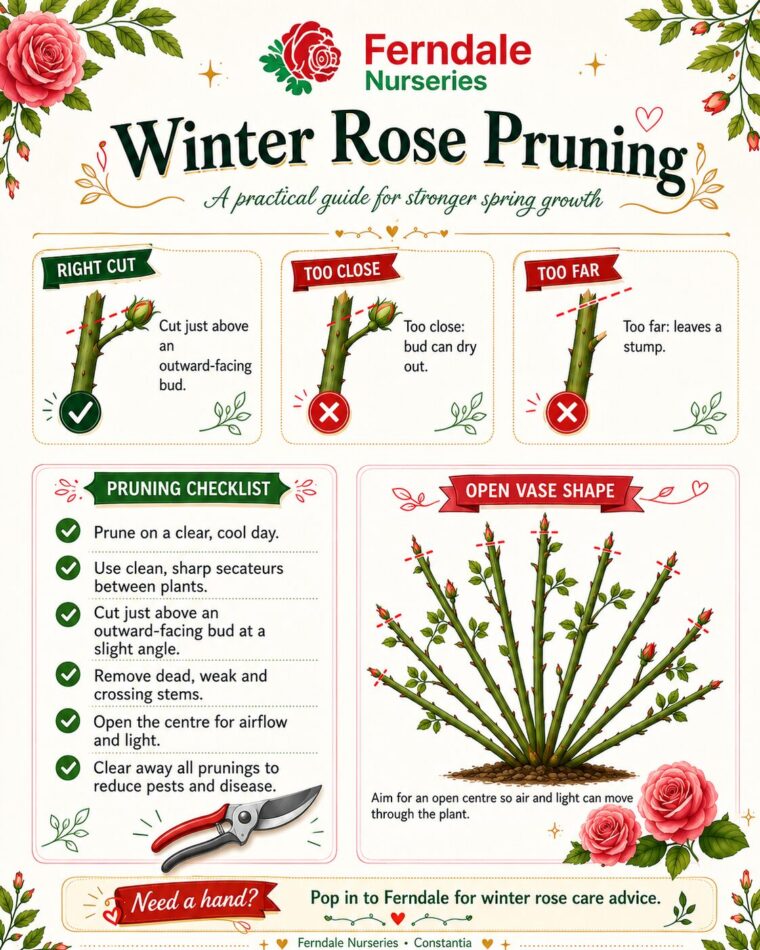
Once the rose is cleaned up, choose the strongest stems to keep. Aim for growth that moves outward rather than back into the centre. This helps create an open vase shape, allowing sunlight and air to reach the inner parts of the rose bush.
The Right Cut
The best cut is made just above a healthy outward-facing bud. Angle the cut slightly away from the bud so water can run off instead of sitting on the cut surface.
Avoid cutting too close, as this can damage the bud. Also, avoid leaving a long stump above the bud, as that section may dry back.
After Pruning
Once you have finished, collect all prunings and fallen leaves from around the plant. This keeps the area tidy and helps reduce places where pests or diseases can linger.
As the season warms and new growth begins, support your roses with compost, mulch and suitable rose food. A little aftercare goes a long way toward encouraging healthy spring growth and a stronger flowering season.
Need A Hand?
Not sure where to cut? Bring a photo of your rose bush when you visit us, and the Ferndale team will be happy to guide you.
Pop in for some expert rose pruning advice, secateurs, gloves, compost, mulch, rose fertilisers and seasonal care products.
Ferndale Nurseries, helping your garden grow beautifully, season after season.